Per- and polyfluoroalkyl substances (PFAS) continue to challenge conventional remediation strategies, particularly when projects require permanent treatment, predictable performance, and confidence that contaminants are truly destroyed rather than transformed into other fluorinated compounds. As expectations for long-term stewardship and defensible cleanup strategies continue to evolve, project teams are increasingly being asked to demonstrate how proposed remedies address both current PFAS compounds and those that may become regulated in the future.
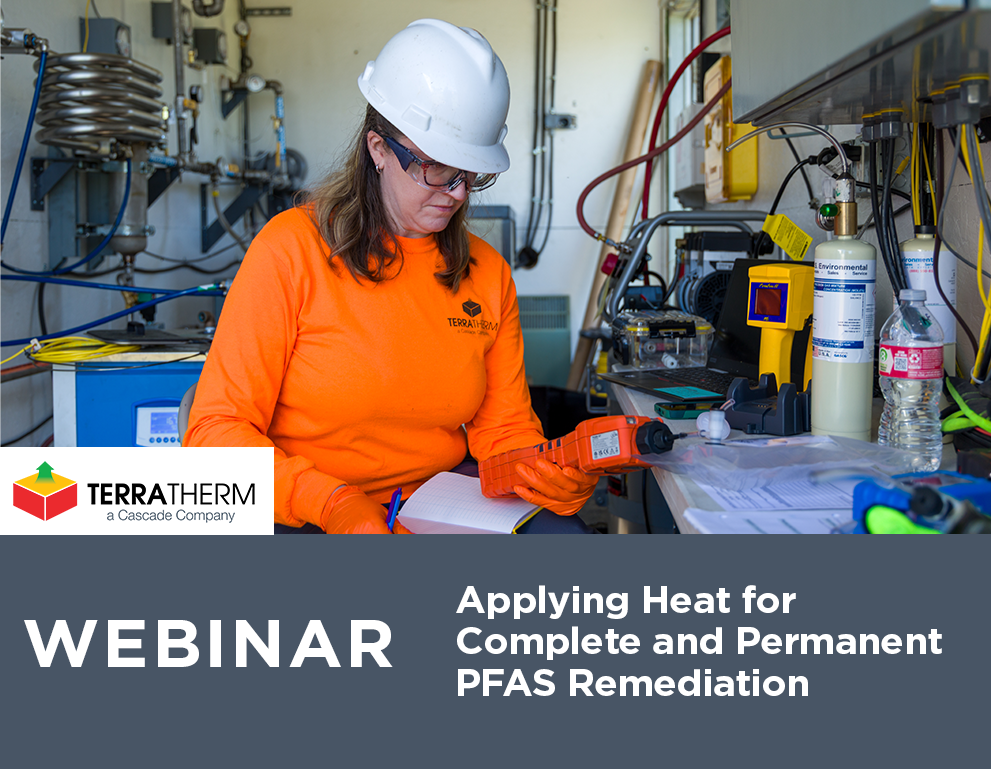
In this webinar, TerraTherm will evaluate how high temperature thermal remediation can be applied to PFAS impacted soil and sediment as a desorption and destructive treatment approach. Drawing on laboratory research and field experience, our technical experts will also present results from a recent field demonstration conducted as part of the Department of War Environmental Security Technology Certification Program (ESTCP) evaluation of PFAS destructive technologies (ER23-8372), highlighting treatment performance, contaminant removal mechanisms, and the role of system design in supporting reliable PFAS destruction.
What You’ll Learn:
- How high temperature thermal remediation systems are designed to treat PFAS and manage fluorinated byproducts using thermal desorption and thermal oxidation
- Key findings from laboratory studies that evaluated treatment temperatures, removal mechanisms, and PFAS breakdown during heating
- Results from a recent ESTCP field demonstration evaluating thermal treatment of PFAS impacted sediment using thermal desorption and thermal oxidation
- When high temperature thermal remediation may be an appropriate option during PFAS remedy evaluation and project planning
Join us on May 20, 2026, for a focused technical discussion that examines how high temperature thermal remediation is being used to completely and safely address one of today’s most persistent environmental contaminants while supporting long-term site management and redevelopment goals.
About the Presenter
|
|
John LaChanceVice President of Development, TerraThermJohn LaChance is the Vice President of Development at TerraTherm. In his 30+ year career in the remediation industry, he has worked on a range of project sites, including chemical manufacturing plants, gas stations, oil refineries, railroads, former MGP sites, solvent recycling facilities, grain and feed storage centers, and landfills. Most of these sites have focused on the assessment and cleanup of chlorinated solvents and other recalcitrant chemicals. |